The Numbers Behind the Surge
- Premarket Move: +4%
- 6-Month Return: +360%
- UBS Price Target: $1,500
- Earnings Date: Wednesday
- Recent Milestone: $1T valuation
Why Memory Is the New Chokepoint
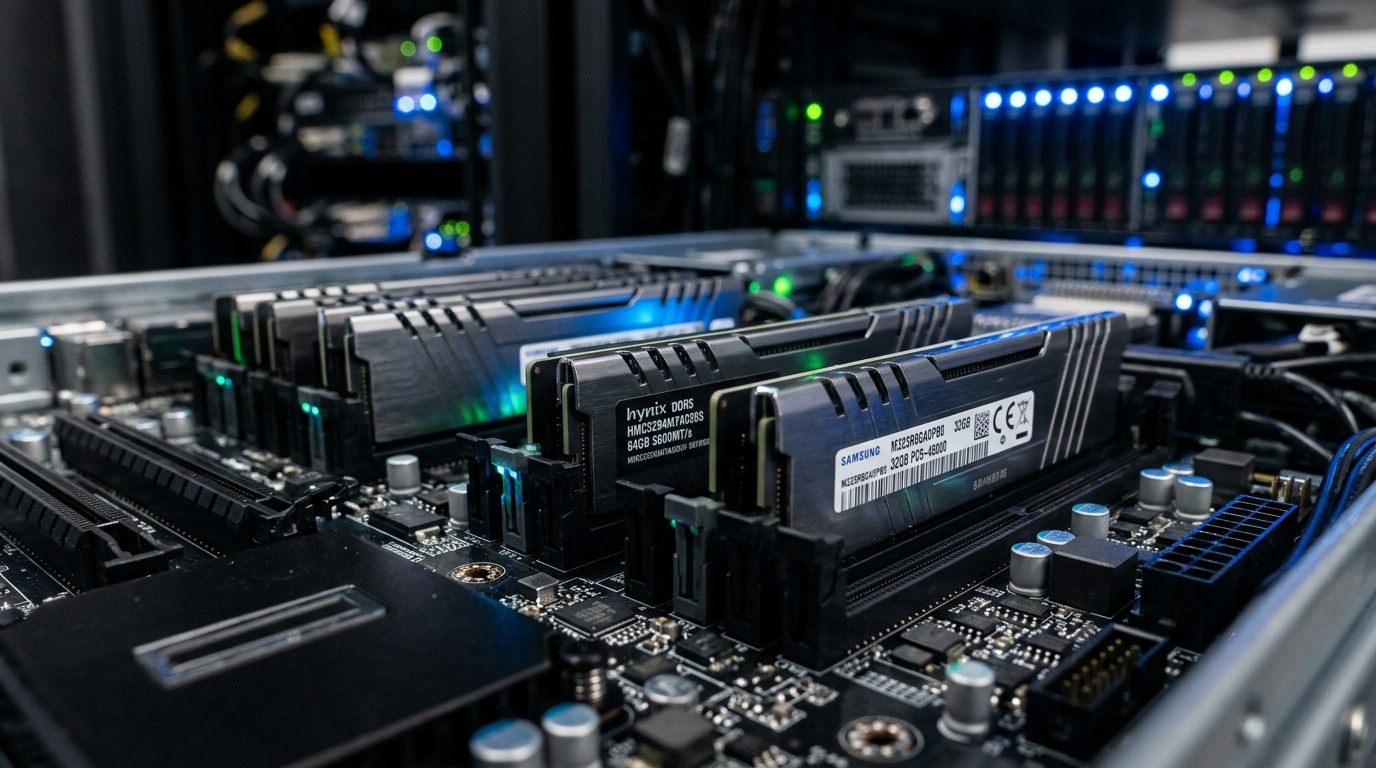
The semiconductor narrative has shifted. While GPU scarcity dominated headlines through 2023, memory—specifically DRAM—has emerged as the next bottleneck in AI infrastructure. Micron sits at the center of this constraint.
UBS analyst Melissa Weathers raised her price target to $1,500 per share, citing a fundamental imbalance: DRAM demand for data centers, servers, and AI workloads is set to vastly outpace supply growth in the coming years. The culprit is AI inference—the process of running trained models at scale—which devours memory bandwidth in ways traditional computing never did.
Micron's 360% surge over the past six months reflects this reality. The stock hit all-time highs Thursday alongside storage peers SanDisk and Western Digital, signaling a broader reckoning across the memory complex.
The Korean Proxy War
Micron's rally isn't happening in isolation. On Monday, SK Hynix surpassed Samsung Electronics to become South Korea's largest company by market capitalization—a historic shift driven by the same supply-demand dynamics.
SK Hynix has aggressively raised unit prices amid tightening supply, a move that underscores how much pricing power has returned to memory makers. Last month, Micron, Samsung, and SK Hynix all crossed $1 trillion valuations for the first time, a trio that now commands the high ground in the AI memory trade.
The Korean reshuffle is more than corporate drama—it's a signal that the memory oligopoly is consolidating gains and that the shortage is real enough to reshape entire national tech hierarchies.
The Memory Trade's Key Players
Micron Technology (MU)
The American incumbent, up 360% in six months. Leads in high-bandwidth DRAM for AI data centers and recently hit $1 trillion valuation. Wednesday's earnings will offer the first clear read on AI inference demand.
SK Hynix (000660.KS)
Just overtook Samsung as South Korea's largest company. Known for aggressive pricing and deep ties to Nvidia's GPU ecosystem. The high-bandwidth memory specialist riding the AI wave hardest.
SanDisk (SNDK)
Storage play benefiting from adjacent tailwinds. Hit all-time highs alongside Micron as investors broaden bets across the memory and storage stack.
Western Digital (WDC)
Another storage peer hitting fresh highs. The rally here suggests the memory shortage is spilling into storage, as AI workloads require both faster memory and deeper storage tiers.
What Wednesday's Earnings Will Reveal
Investors are treating Micron's Wednesday report as a bellwether for the entire AI infrastructure thesis. The key question: has AI inference demand—running deployed models in production—begun to drive material revenue, or is this still a forward-looking bet?
Micron's guidance will matter more than the quarter itself. If management signals accelerating DRAM orders from hyperscalers and AI infrastructure builders, the $1,500 price target starts to look reasonable. If demand is still concentrated in training rather than inference, the rally may be ahead of the fundamentals.
The premarket move suggests the street is positioned for a beat. The risk is that even a strong quarter gets sold if guidance doesn't confirm the multi-year supply deficit that UBS and others are pricing in.
The Structural Thesis
Memory has always been cyclical—boom, bust, consolidation, repeat. What's different this time is the durability of demand. AI inference isn't a one-time buildout; it's a sustained architectural shift that increases memory intensity per compute dollar spent.
According to UBS, this isn't a temporary spike. Memory-intensive AI workloads are rewriting the economics of data center design, and supply—constrained by capital intensity and manufacturing lead times—can't catch up quickly. That gap is what's driving Micron, SK Hynix, and the broader memory complex to record valuations.
The question for investors is whether this cycle ends like the others, or whether AI demand creates a longer, more stable upcycle. Wednesday's earnings will offer the first hard data point.
FAQ
Why is memory a bottleneck for AI?
AI inference—running trained models at scale—requires massive memory bandwidth to feed GPUs and accelerators. Unlike traditional computing, where compute and memory scaled together, AI workloads are memory-bound. DRAM demand is growing faster than supply, creating a structural shortage that benefits Micron, SK Hynix, and Samsung.
What's the difference between AI training and AI inference?
Training builds the model—compute-intensive, one-time. Inference runs the model in production—memory-intensive, continuous. The transition from training-focused AI infrastructure to inference-focused infrastructure is what's driving the memory shortage. Inference happens millions of times per day; training happens once.
Is Micron's rally sustainable?
It depends on whether AI inference demand materializes at scale. UBS's $1,500 target assumes DRAM demand vastly outpaces supply for years. If Wednesday's earnings and guidance confirm accelerating orders from hyperscalers and AI builders, the rally has legs. If demand is still speculative, the stock is pricing in a future that hasn't arrived yet.
Why did SK Hynix overtake Samsung?
SK Hynix has been more aggressive in high-bandwidth memory for AI, raised prices faster as supply tightened, and benefited from close ties to Nvidia's GPU ecosystem. Samsung has been slower to pivot. The market cap flip reflects investor confidence that SK Hynix is better positioned for the AI memory cycle.
This content is for informational purposes only and does not constitute investment advice. Trading stocks involves risk, including the potential loss of principal. Past performance does not guarantee future results. Consult a licensed financial advisor before making investment decisions.